Introduction
Setting up a new aquarium is exciting, but adding fish too soon can put their health at risk. Before introducing fish, it is important to establish beneficial bacteria that help break down harmful waste in the water. This process is known as aquarium cycling.
If you are wondering how to cycle a new fish tank properly, this beginner-friendly guide will walk you through the process step by step. You will learn how the nitrogen cycle works, how to test your aquarium water, and how to know when your tank is ready for fish.
What Is Aquarium Cycling?
Aquarium cycling is the process of building beneficial bacteria in a new fish tank. These bacteria help convert toxic ammonia from fish waste, leftover food, and decaying organic matter into less harmful substances.
Without an established biological filtration system, ammonia and nitrite can accumulate in the water and harm or even kill fish.
A properly cycled aquarium provides a more stable environment, making it easier to maintain healthy water conditions over time.
Understanding the Nitrogen Cycle
Before learning how to cycle a new fish tank properly, you should understand the nitrogen cycle and why it matters.
The nitrogen cycle involves three main stages:
- Stage 1: Ammonia production. Fish waste, uneaten food, and decomposing organic matter release ammonia into the water. Ammonia is toxic to fish, even at relatively low concentrations.
- Stage 2: Nitrite formation. Beneficial bacteria convert ammonia into nitrite. Although this is a step forward, nitrite is also toxic to fish.
- Stage 3: Nitrate formation. Another group of beneficial bacteria converts nitrite into nitrate. Nitrate is generally less toxic at typical aquarium concentrations but still needs to be controlled through water changes and, in some tanks, live plants.
Once these bacteria are established, the aquarium can process waste more effectively and maintain safer water conditions.
How to Cycle a New Fish Tank Properly: Step-by-Step Guide
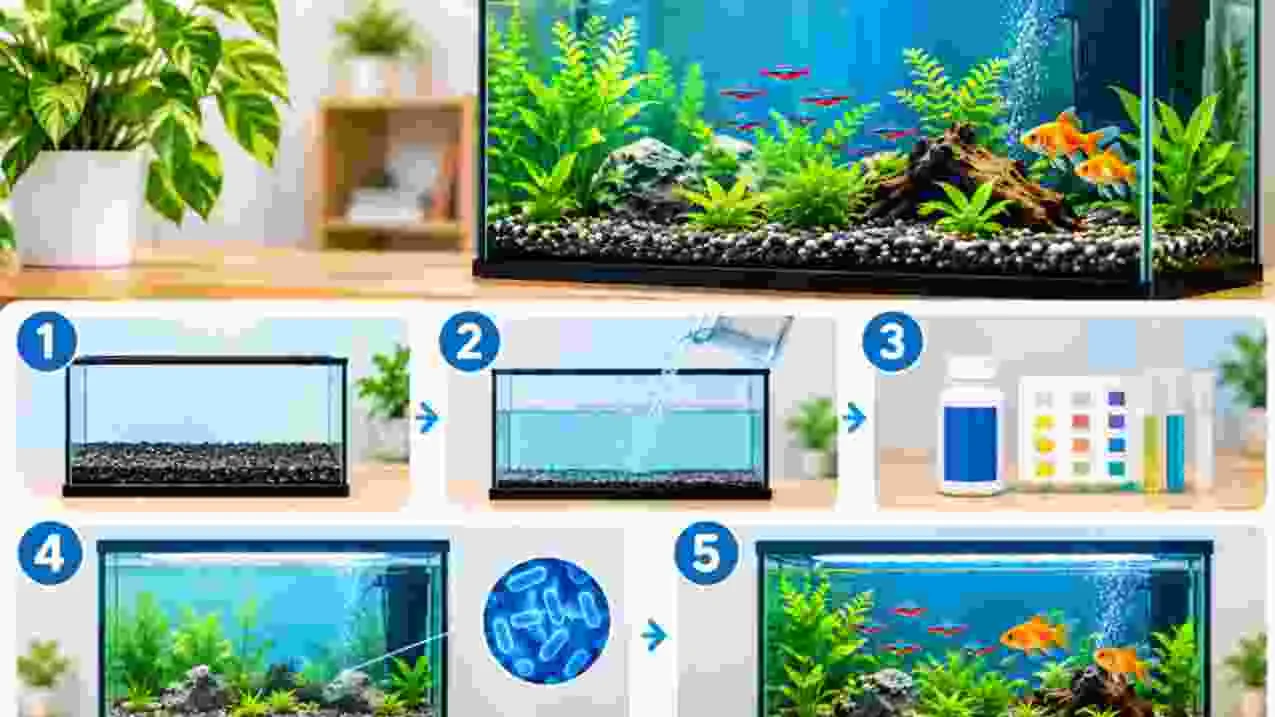
Step 1: Set Up Your Aquarium
Start by placing your aquarium on a stable, level surface away from direct sunlight and sudden temperature changes. Add the substrate, decorations, and any live plants you want to include.
Install your filter and heater if your chosen fish require one. Fill the aquarium with tap water treated with a suitable water conditioner that neutralizes chlorine and chloramine.
Turn on the filter and allow the equipment to run continuously. Beneficial bacteria need oxygen and a suitable environment to establish themselves, so proper filtration is essential.
Step 2: Choose a Safe Ammonia Source
For most beginners, a fishless cycle is the safest and most manageable approach. This method allows beneficial bacteria to develop without exposing fish to toxic ammonia or nitrite.
Use aquarium-grade ammonium chloride or another suitable, clearly labeled ammonia source intended for fishless cycling. Follow the product instructions and avoid household ammonia products containing fragrances, detergents, or other additives.
Add only the recommended amount. Too much ammonia can slow the cycling process, so regular water testing is important.
Step 3: Keep the Filter Running
Your aquarium filter plays a major role in the cycling process because beneficial bacteria colonize the filter media and other surfaces inside the tank.
Keep the filter running 24 hours a day. Maintain an appropriate temperature and good water circulation for the fish species you intend to keep.
If you want to help the process along, consider using established filter media from a healthy, disease-free aquarium or a reputable bottled beneficial bacteria product. These options may help introduce useful bacteria, although they do not guarantee an instant cycle.
Step 4: Test the Water Regularly
Testing the water is one of the most important parts of learning how to cycle a new fish tank properly.
Use a reliable aquarium test kit to monitor the following parameters:
- Ammonia: Check whether the ammonia level begins to decrease as bacteria develop.
- Nitrite: Watch for nitrite to appear and then decline as the next group of bacteria becomes established.
- Nitrate: Check for nitrate accumulation as the cycle progresses.
- pH: Monitor pH because unsuitable or unstable conditions can affect bacterial activity.
Record your results every day or every few days, following your cycling product’s instructions. These readings help you understand what is happening inside the aquarium instead of relying on appearance alone.
Remember that clear water does not necessarily mean your tank is safe for fish.
Step 5: Give Beneficial Bacteria Time to Grow
Aquarium cycling takes patience. Many new tanks require around four to six weeks to cycle, although some finish sooner and others take considerably longer.
During this time, keep the filter operating, maintain suitable conditions, and continue supplying the measured ammonia source according to your cycling method.
Avoid adding fish just because ammonia has started to fall. Nitrite may still be present at harmful levels, meaning the aquarium’s biological filtration is not yet fully established.
You should also avoid unnecessary filter cleaning or replacing all the filter media, as these actions can remove a significant portion of the beneficial bacteria.
Step 6: Confirm That the Tank Is Fully Cycled
How do you know when your new aquarium is ready for fish?
A fishless cycle is generally considered complete when the tank can process an appropriate measured dose of ammonia into nitrate, with both ammonia and nitrite returning to zero within the timeframe specified by your cycling method. A common benchmark is approximately 24 hours.
Before adding fish, confirm that:
- Ammonia reads 0 ppm.
- Nitrite reads 0 ppm.
- The tank processes the appropriate ammonia dose within about 24 hours.
- Temperature, pH, and other water conditions are suitable for your intended fish.
Do not rely on nitrate readings alone to confirm cycling, as nitrate can come from other sources and may be consumed by live plants.
Step 7: Perform a Water Change Before Adding Fish
After the cycle is complete, test your water and perform a partial water change if nitrate levels are elevated. The amount of water to replace depends on the nitrate concentration and the needs of your fish.
Use conditioned replacement water with a temperature close to that of the aquarium. Retest the water afterward to confirm that conditions are suitable.
If you are not adding fish immediately, follow your cycling method’s instructions for maintaining the bacterial colony. Avoid leaving an established filter without an ammonia source for an extended period.
Step 8: Introduce Fish Gradually
Once the aquarium is fully cycled and its water parameters are suitable, you can begin adding fish.
Choose species that match your tank size, temperature, and water chemistry. Acclimate them carefully according to the needs of the species and the seller’s guidance.
Start with an appropriate stocking level rather than adding too many fish at once. Even a cycled aquarium can experience an ammonia spike if its biological filter is suddenly overwhelmed.
Test ammonia and nitrite frequently during the first few weeks after introducing fish. If either becomes detectable, take prompt action to protect your fish, including appropriate partial water changes and checking the filter.
Common Mistakes to Avoid When Cycling a Fish Tank
Even with the right equipment, a few common mistakes can delay the cycling process or put fish at risk.
Adding fish too early: The aquarium may look ready before its beneficial bacteria can process waste effectively. Always confirm the cycle with water tests.
Using untreated tap water: Chlorine and chloramine can harm beneficial bacteria. Treat tap water with an appropriate water conditioner.
Overdosing ammonia: Excessive ammonia can interfere with the process. Follow the instructions for your ammonia source and test regularly.
Replacing all filter media: Much of the aquarium’s beneficial bacteria live in the filter. Replace media only when necessary and follow the manufacturer’s guidance.
Ignoring water parameters: Temperature, pH, and other conditions can affect bacterial activity. Monitor them throughout the cycle.
Assuming bottled bacteria guarantees instant cycling: Some products can help, but testing is still necessary to confirm that the aquarium can process waste safely.
How Long Does It Take to Cycle a New Fish Tank properly?
Most new aquariums take approximately four to six weeks to complete the cycling process, but the timeline varies. Factors such as water temperature, pH, ammonia levels, filtration, and the presence of established biological media can affect how quickly bacteria develop.
Rather than following a fixed number of days, use water test results to determine when the cycle is complete.
A tank that finishes in three weeks is not necessarily better than one that takes six weeks. The important thing is to establish reliable biological filtration before introducing fish.
Can You Cycle a Fish Tank Without Fish?
Yes. Fishless cycling is generally recommended for beginners because it avoids deliberately exposing fish to toxic ammonia and nitrite.
You can use a measured ammonia source to feed the developing bacteria while monitoring the water. This approach also lets you establish the aquarium’s biological filtration before fish produce waste.
Although fish-in cycling is possible, it requires careful monitoring, prompt water changes when needed, and close attention to fish health. For a new aquarium, fishless cycling is usually the more straightforward option.
Final Thoughts
Learning how to cycle a new fish tank properly is one of the most important steps toward keeping healthy aquarium fish. By setting up your equipment correctly, supplying a safe ammonia source, monitoring water parameters, and allowing beneficial bacteria to establish themselves, you can create a stable environment before introducing fish.
Remember that patience is essential. Do not rush the process or rely on clear water as proof that your aquarium is ready. Test the water, confirm that ammonia and nitrite return to zero after an appropriate ammonia dose, and introduce fish gradually.
A properly cycled aquarium gives your fish a healthier start and makes long-term aquarium maintenance much easier.